
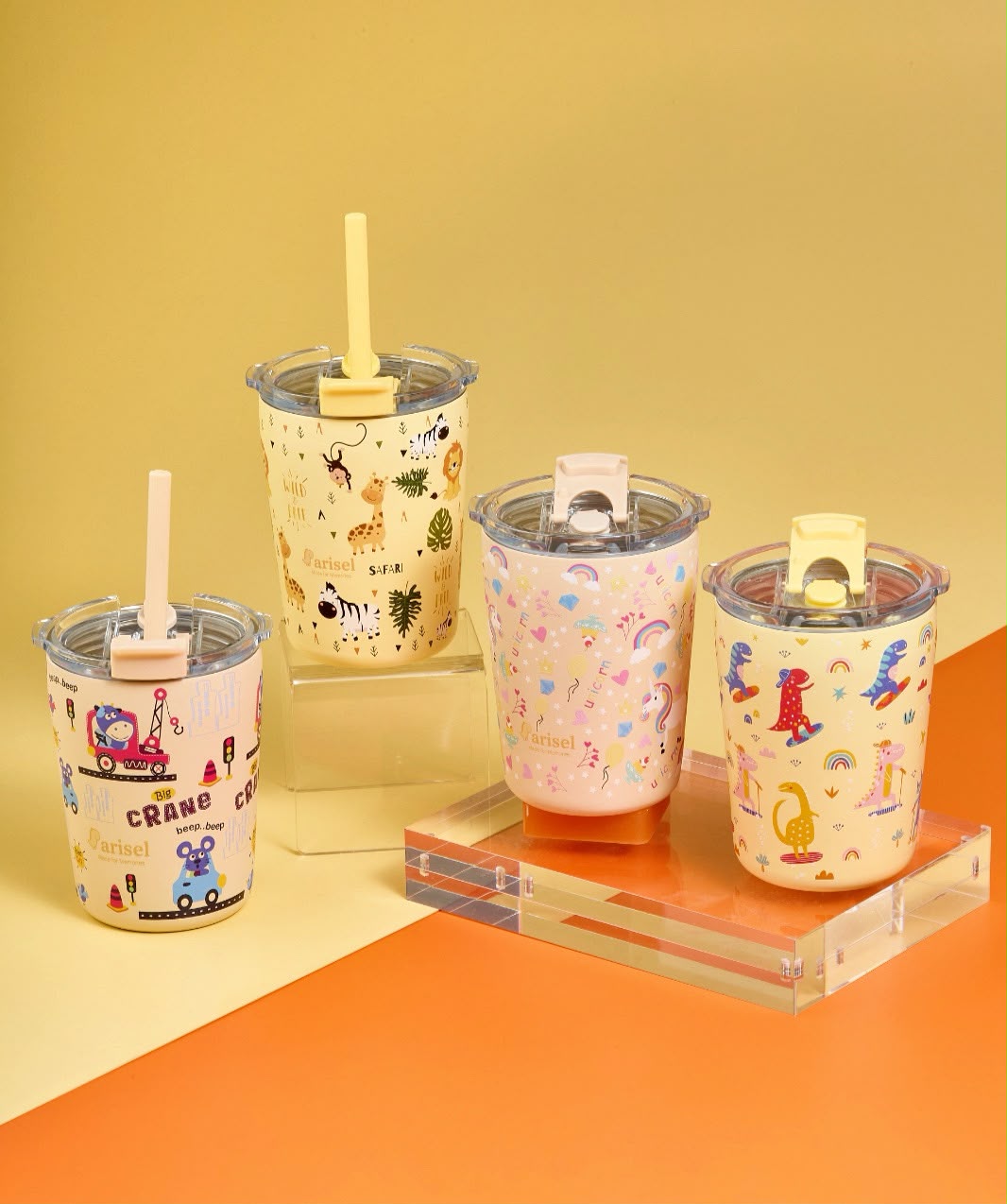
At some point, almost every parent has stood in a store aisle, cup in hand, thinking: it's just a few dollars, why not grab the cheap one?
We did too. More than once. And for a while, it made sense — cheap cups feel like a low-risk purchase. But somewhere between our third replacement pack of plastic sippy cups and one particularly memorable "why does this smell weird" moment, we started doing the math. What we found changed how we think about tableware completely.
The Cup You Buy Three Times a Year
Cheap plastic cups don't really last. They crack after a few drops. They go cloudy and stained after a handful of trips through the dishwasher. The spouts wear out, the seals stop sealing, and eventually you're back at the store, buying the same cup all over again — sometimes every few months.
It doesn't feel like a big expense in the moment. A $3-5 cup here, another one there. But add it up over a year — or two, or three — and most parents are quietly spending far more replacing plastic cups than they'd ever spend on one that actually lasts.
The Cost You Don't See on the Price Tag
Here's the part that doesn't show up on any receipt: plastic degrades every time it's washed, heated, or scratched — and as it breaks down, it can release tiny amounts of chemicals and microplastics into whatever your child is drinking. Even "BPA-free" plastic isn't necessarily solving this — many replacement chemicals used instead of BPA may carry similar risks, and none of it becomes more comforting the longer a cup sits in daily rotation.
There's also the smell problem most parents know all too well. Plastic is porous, which means it slowly absorbs odors and residue over weeks of use — milk, juice, the inside of a dishwasher — and no amount of scrubbing fully gets it back to "new." If you've ever picked up your toddler's "clean" cup and caught a whiff of something off, you've met this problem firsthand.
None of this shows up as a cost when you're standing in the store. But it adds up — in replacement purchases, in plastic waste, and in the quiet worry a lot of parents carry about what their kids are actually drinking out of every day.
Why We Made the Switch
We didn't set out to build a tableware brand — we set out to solve a problem in our own home. After one too many mystery smells and one very suspicious refused drink, we went looking for a cup that was genuinely safe, easy for small hands to hold, and didn't cost a fortune. When we couldn't find one that checked every box, we made it ourselves.
Stainless steel changed the math for us. Yes, it costs more upfront than a $3 plastic cup — but it's built to last years, not months. It doesn't absorb smells. It doesn't degrade the way plastic does. And once we stopped replacing cups every few months, the actual cost over time worked out lower, not higher — with the added peace of mind that came from knowing exactly what our kids were drinking out of.
Doing the Real Math
Think about it this way: if a plastic cup needs replacing every 3-4 months, that's 3-4 purchases a year, every year, for as long as your child uses one. A well-made stainless steel cup, on the other hand, is designed to survive years of daily use — drops, dishwashers, and all — often getting handed down to a younger sibling once it's outgrown.
When you actually add up the replacements, the "cheap" option often isn't cheap at all. It's just a cost spread out in small, easy-to-miss pieces — a few dollars here, a quick reorder there — until you look back and realize how much you've spent buying the same cup, over and over again.
Our Take, as Parents
We're not saying every plastic product is a problem, or that switching everything overnight is realistic — most of us are just trying to get through the week. But when it comes to something your child uses every single day, multiple times a day, we think it's worth asking: is this actually the cheaper choice, or does it just feel that way at checkout?
For us, the answer was clear enough to build a brand around it.